
Marshall McLuhan remains one of the most cited and debated media theorists of the 20th century. Known for coining the phrase “the medium is the message” and for anticipating the logic of today’s networked digital culture, his ideas continue to shape media ecology, digital literacy, and communication theory. This article examines McLuhan’s life and contributions and clarifies the current status and role of the McLuhan Global Research Network (MGRN) in the post-2023 landscape of McLuhan studies.
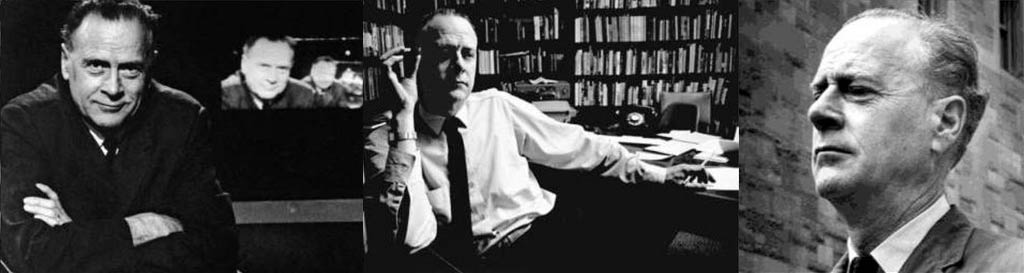
Marshall McLuhan: The Man Behind the Network
Marshall McLuhan was a Canadian intellectual who was born on July 21, 1911, in Edmonton, Canada. He grew up in Winnipeg, where he attended Kelvin Technical High School. After completing high school, McLuhan attended the University of Manitoba, where he studied English, philosophy, and political science. He went on to complete a master’s degree in English at the University of Manitoba, where he wrote his thesis on the English metaphysical poets.
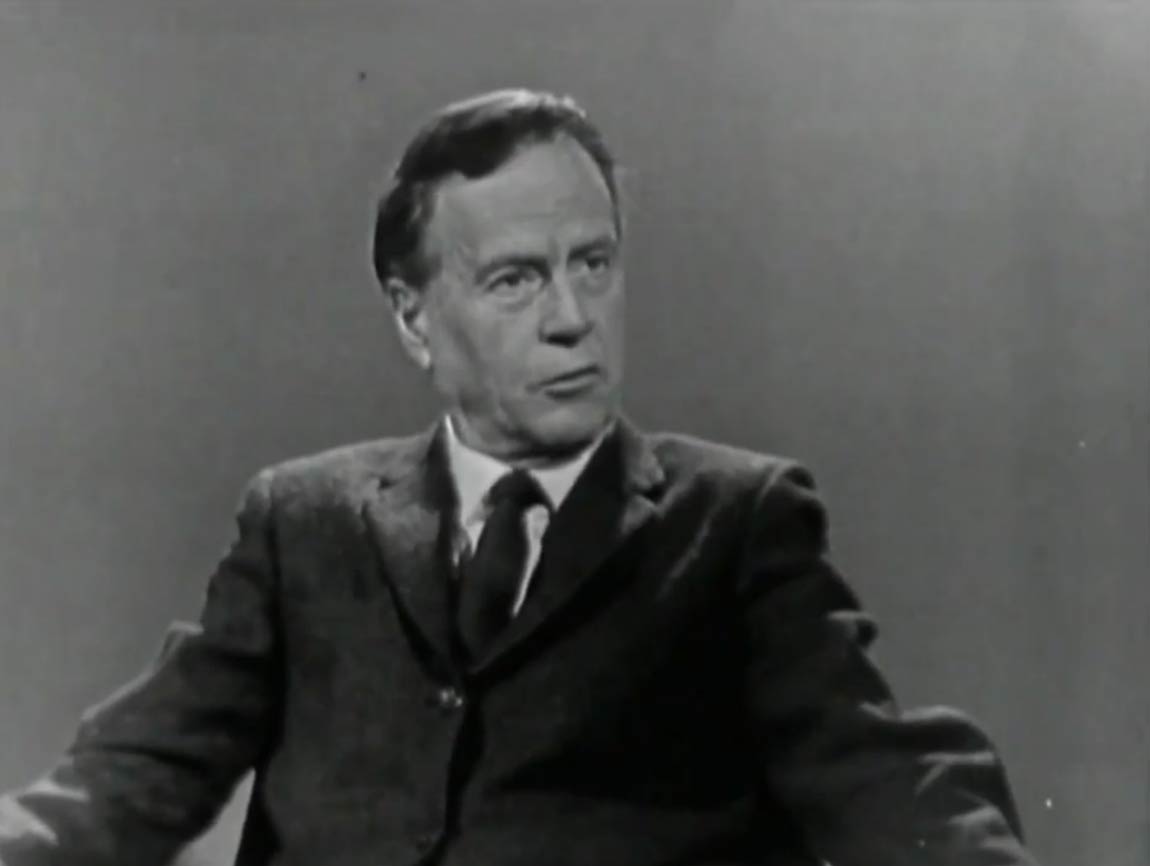 In 1934, McLuhan received a scholarship to study at Cambridge University in England, where he pursued a doctorate in English literature. It was at Cambridge that McLuhan became interested in the relationship between communication and society, an interest that would shape his future work. While at Cambridge, McLuhan also became interested in the work of the French philosopher Henri Bergson, whose ideas about time and consciousness would influence McLuhan’s later work.
After completing his doctorate at Cambridge, McLuhan returned to Canada, where he took up a position at the University of Toronto. Over the next several years, McLuhan became increasingly interested in the impact of media on society and began to develop the ideas and concepts that would make him famous.
In 1963, McLuhan founded the Centre for Culture and Technology at the University of Toronto, an interdisciplinary hub dedicated to exploring the social and psychological effects of technological change. The Centre later evolved into the McLuhan Program and, eventually, the McLuhan Centre for Culture and Technology, which operated under various institutional names until 2023.
Contributions to Media Studies
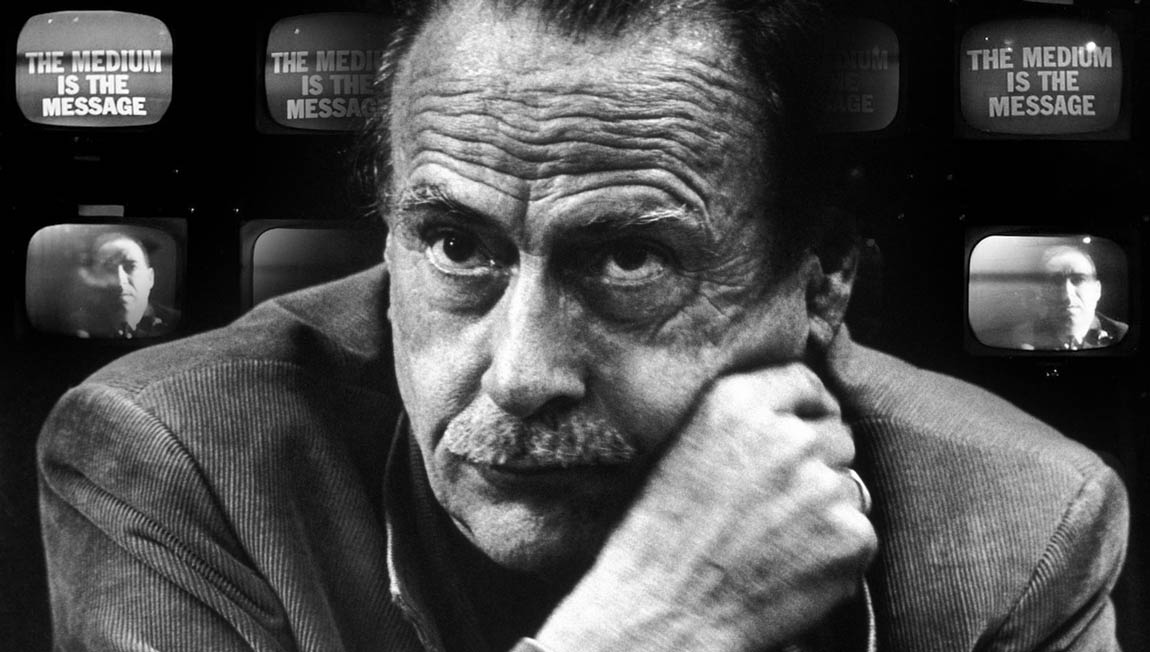
McLuhan is known for his emphasis on the impact of media on society, particularly the effects of new media technologies on human perception and communication. He introduced several key ideas and concepts, including the notion that “the medium is the message” and the idea that different media have different effects on the human sensorium.
His concept of the “global village” anticipated the interconnected dynamics later embodied by the Internet and digital networks. In the 21st century, renewed interest in McLuhan’s work has emerged in fields such as digital media literacy, AI studies, platform culture, and media ecology.
Figure and Ground in Contemporary Media Systems
One of McLuhan’s most enduring analytical tools is the distinction between figure and ground. The figure is what captures immediate attention – the visible message, image, or piece of content. The ground, by contrast, is the surrounding environment that shapes perception but often remains unnoticed. For McLuhan, the ground is more powerful than the figure, because it conditions experience before any conscious interpretation begins.
In contemporary digital systems, this distinction remains highly relevant. Users tend to focus on content posts, videos, headlines, or interactive elements while the underlying interface design, algorithmic sequencing, and feedback structures function as the ground. These invisible structures influence pacing, engagement patterns, and decision-making processes in ways that are rarely examined directly.
Interactive Digital Environments and Structured Participation
This figure/ground dynamic becomes particularly visible in highly interactive digital environments, where participation is not passive but structured by interface design. Platforms that rely on real-time feedback, probability visualization, timed interactions, and audiovisual reinforcement create immersive technological conditions that shape user behaviour before content is consciously evaluated.
From a media-ecological perspective, regulated online casino platforms offer a clear example of this structural logic. Rather than viewing them solely as collections of games, they can be analysed as designed environments in which interface layout, timing cycles, statistical displays, and sensory cues form the ground that organizes perception and decision-making. In this sense, the medium, the digital architecture itself, exerts influence independently of individual outcomes.
This structural analysis becomes clearer when looking at how payment systems are built into these platforms. For example, Interac casinosare often presented in detailed comparisons, where transaction speed, verification steps, and interface logic are described as part of the overall digital environment, not just as separate financial features.
The same applies to discussions about the best online casino Canada platforms, which are oftenlinked to resources like this independent ranking of real-money sites. These pages do more than list options: they explain how payout transparency, structural clarity, platform stability, and interface consistency influence user experience and decision-making. In this way, both types of pages illustrate how technical design and financial systems function as part of the broader digital architecture that shapes participation.
Examining such systems through McLuhan’s framework shifts attention away from isolated messages and toward the broader technological conditions that organize participation. This approach aligns with current discussions in media literacy, platform governance, and the ethics of digital design.
The McLuhan Global Research Network: Origins and Objectives
The McLuhan Global Research Network (MGRN) was established in 1994, five years after the death of Marshall McLuhan, by a group of scholars and researchers who were inspired by his work. These scholars recognized the importance of McLuhan’s ideas and concepts in the field of media and communication and sought to build on his legacy by creating a network that would promote interdisciplinary research into these topics.
From the outset, the MGRN has had a particular focus on McLuhan’s ideas and concepts, which have become increasingly relevant in today’s rapidly changing media landscape. McLuhan’s work emphasized the importance of understanding the impact of media on human perception and communication, and his insights have proven to be prescient in the age of digital media.
It is important to distinguish the MGRN from the institutional Centre for Culture and Technology at the University of Toronto. While the university-based Centre (founded in 1963) formally ceased operating under the McLuhan name in 2023 following a decision by the McLuhan Estate, the MGRN functions as an independent scholarly network rather than a university-administered centre.
The MGRN’s focus on McLuhan’s ideas and concepts has helped to ensure that his legacy continues to influence scholars and researchers around the world. By promoting interdisciplinary research into media and communication, the MGRN has helped to advance our understanding of the complex relationship between media and society and to develop new insights and perspectives on the impact of media on human cognition, behaviour, and culture.
Founding Members and Key Figures
The MGRN was founded by a group of scholars and researchers who were deeply influenced by Marshall McLuhan’s work and who recognized the importance of continuing his legacy. Among the founding members of the network were some of McLuhan’s closest collaborators and colleagues, including Eric McLuhan, Marshall McLuhan’s son and a prolific writer and scholar in his own right, and Derrick de Kerckhove, a former colleague of McLuhan’s who worked with him on several projects.
Other key figures in the MGRN include Robert K. Logan, who worked closely with McLuhan on several publications and projects, and Paul Levinson, a media scholar and author who has written extensively on McLuhan’s work and ideas.
Since Eric McLuhan’s passing in 2018 and the institutional closure of the McLuhan Centre in 2023, much of the continuity of McLuhan scholarship has shifted toward dispersed academic initiatives, independent research collaborations, digital archives, and global media literacy projects inspired by his work.

Objectives of the Network
The McLuhan Global Research Network (MGRN) outlined several key objectives that reflect a commitment to interdisciplinary collaboration, global engagement, and the promotion of innovative research in the field of media and communication. These objectives include:
- Promoting and facilitating research into media and communication, with a focus on the ideas and concepts introduced by Marshall McLuhan
- Conducting and promoting interdisciplinary research on a wide range of topics related to media and communication, with the aim of encouraging new insights and perspectives on the impact of media on society and culture
- Fostering connections between scholars and researchers around the world, creating opportunities for collaboration and communication among experts from different fields and cultures
- Encouraging the preservation and promotion of Marshall McLuhan’s work and legacy, ensuring that his ideas and concepts continue to influence scholars and researchers around the world
- Supporting the development of new and innovative research methodologies and tools that can help us better understand the complex relationship between media and society
- Encouraging the dissemination of research findings and insights through conferences, publications, and other channels, in order to promote wider engagement and dialogue on issues related to media and communication.
Research and Projects of the McLuhan Global Research Network
The MGRN conducted research on a wide range of topics, including:
- The impact of digital media on society.
- The relationship between media and globalization.
- The role of media in shaping political discourse.
- The effects of media on human cognition and perception.
In recent years, McLuhan-inspired scholarship has increasingly addressed artificial intelligence, algorithmic culture, platform governance, immersive media, and the cognitive effects of constant digital connectivity.
Examples of Recent and Ongoing Research Projects
Some recent and ongoing research projects conducted by the MGRN include:
- The McLuhan Initiative is a project aimed at preserving and promoting McLuhan’s work and legacy.
- The Global Media Studies Initiative focuses on the role of media in shaping global culture and identity.
- The Toronto School Project explores the ideas and concepts developed by McLuhan and other scholars associated with the Toronto School of Communication.
Interesting Findings and Insights
The MGRN has produced a wealth of interesting findings and insights over the years. For example, research conducted by the network has shown that the rise of digital media has led to significant changes in the way people communicate and interact with each other. The MGRN has also explored the impact of media on political discourse and has identified ways in which media can be used to promote more informed and constructive dialogue.
Impact and Significance of the McLuhan Global Research Network
The MGRN has had a significant impact on media studies and related fields. The network has helped to promote interdisciplinary research and collaboration and applied McLuhan’s ideas and concepts to a wide range of topics and issues. The MGRN has also helped to keep McLuhan’s work and legacy alive, ensuring that his ideas continue to influence scholars and researchers around the world.
Although the University of Toronto’s McLuhan Centre for Culture and Technology formally ended in 2023, McLuhan’s intellectual influence has not diminished. Instead, it has become more diffused, manifesting in media ecology programs, digital literacy foundations, academic conferences, and international research collaborations.
Success Stories and Achievements of the Network
One of the MGRN’s key achievements is its role in promoting interdisciplinary collaboration and communication. The network has brought together scholars and researchers from a wide range of fields, including media studies, sociology, philosophy, and psychology. This has led to a more nuanced understanding of the ways in which media and communication shape society and culture.
The MGRN has also produced a wealth of research that has had a significant impact on academic and public discourse. For example, research conducted by the network has shed light on the role of media in shaping political discourse and public opinion. The MGRN’s work has also helped to identify ways in which media can be used to promote more informed and constructive dialogue, particularly in the context of political polarization and social conflict.
Final Insights
The institutional chapter of McLuhan’s Centre at the University of Toronto concluded in 2023, but the intellectual project he began continues. The McLuhan Global Research Network and related initiatives represent a decentralized continuation of his legacy—less tied to a single building or university, and more reflective of the distributed, networked world he foresaw.
Through its research and projects, the MGRN has produced a wealth of insights and findings that have helped to shape academic and public discourse on the impact of media on society and culture. The network’s future looks bright as it continues to explore new areas of research and promote McLuhan’s legacy to new generations of scholars and researchers.